FAQ
Questions you may have:
Ensuring Compliance with International Accords
A key focus for ECSA is ensuring that all registrations align with the prestigious Washington, Sydney, and Dublin Accords, maintaining international recognition for South African engineering professionals.
To achieve this, ECSA rigorously assesses candidates’ academic qualifications to ensure they meet the stringent requirements of each Accord.





Can I register as a Pr Eng without an engineering degree?
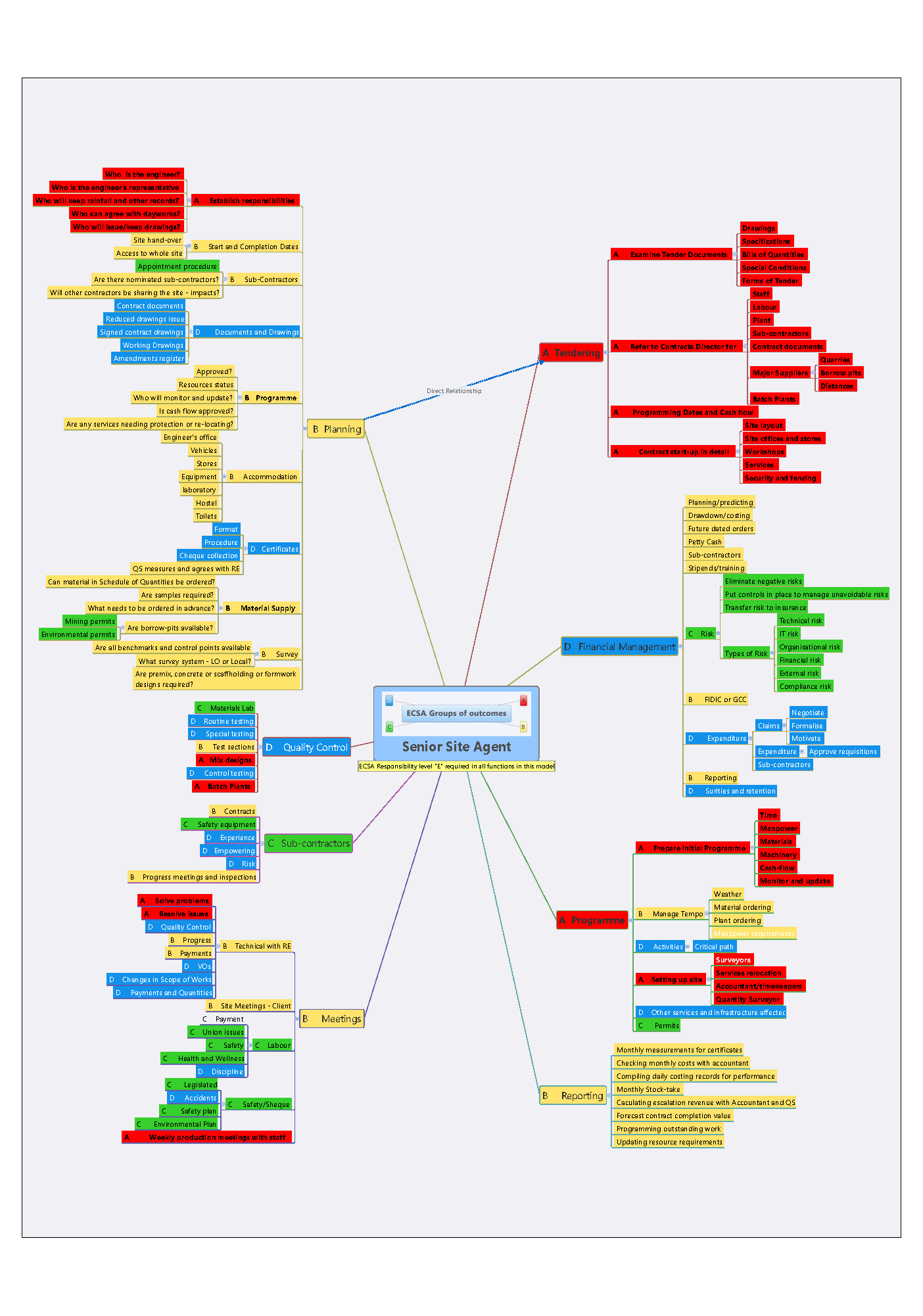
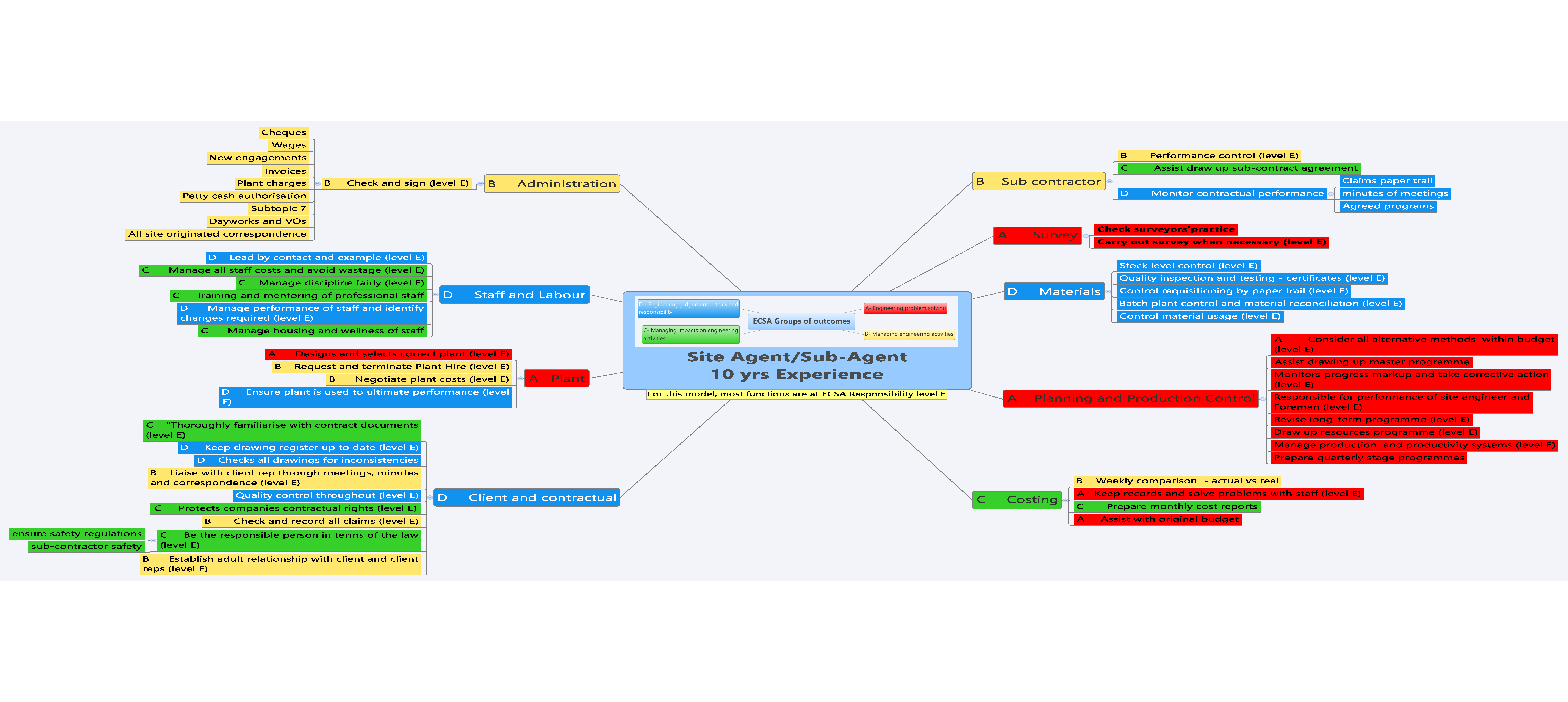
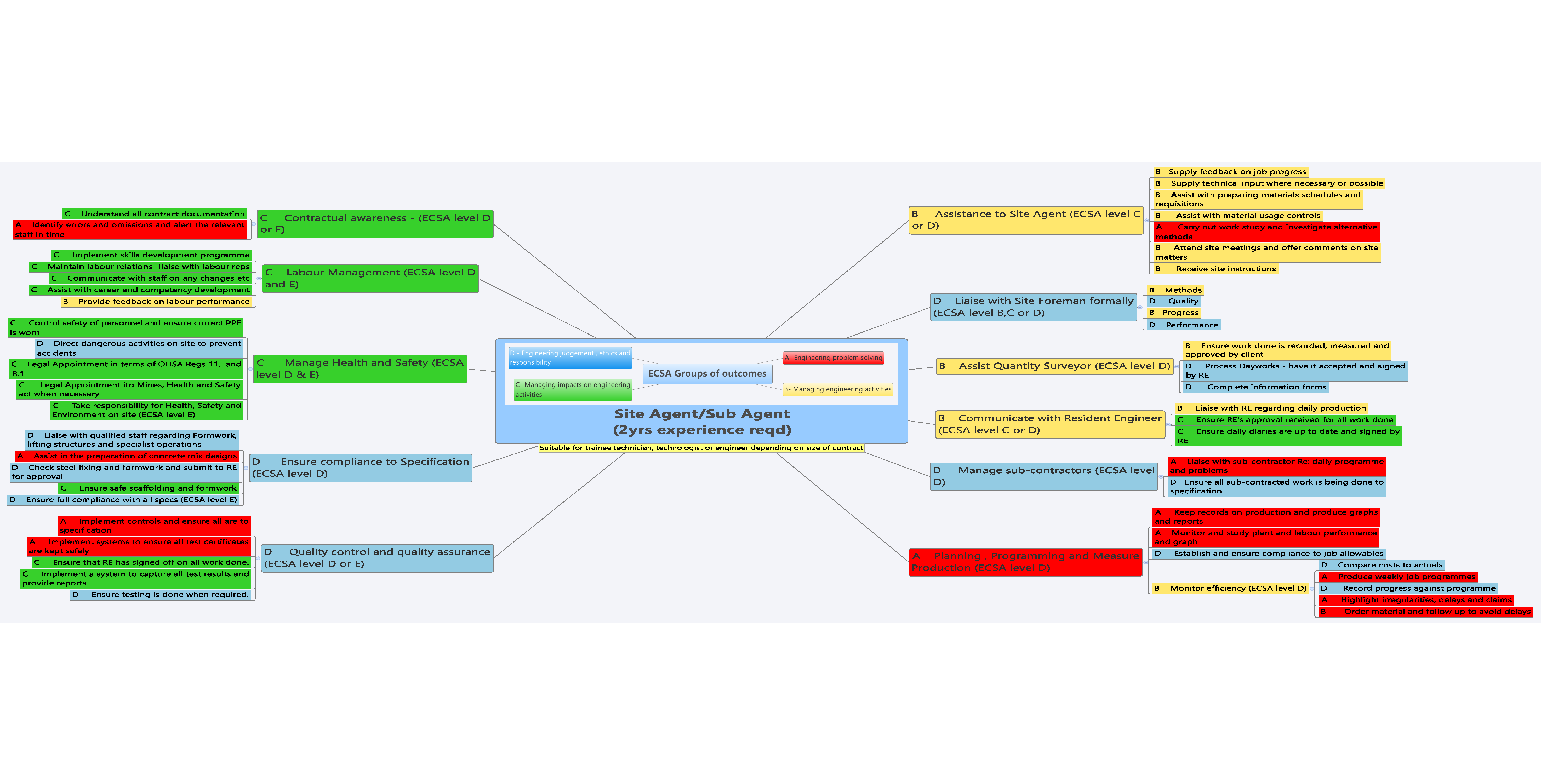
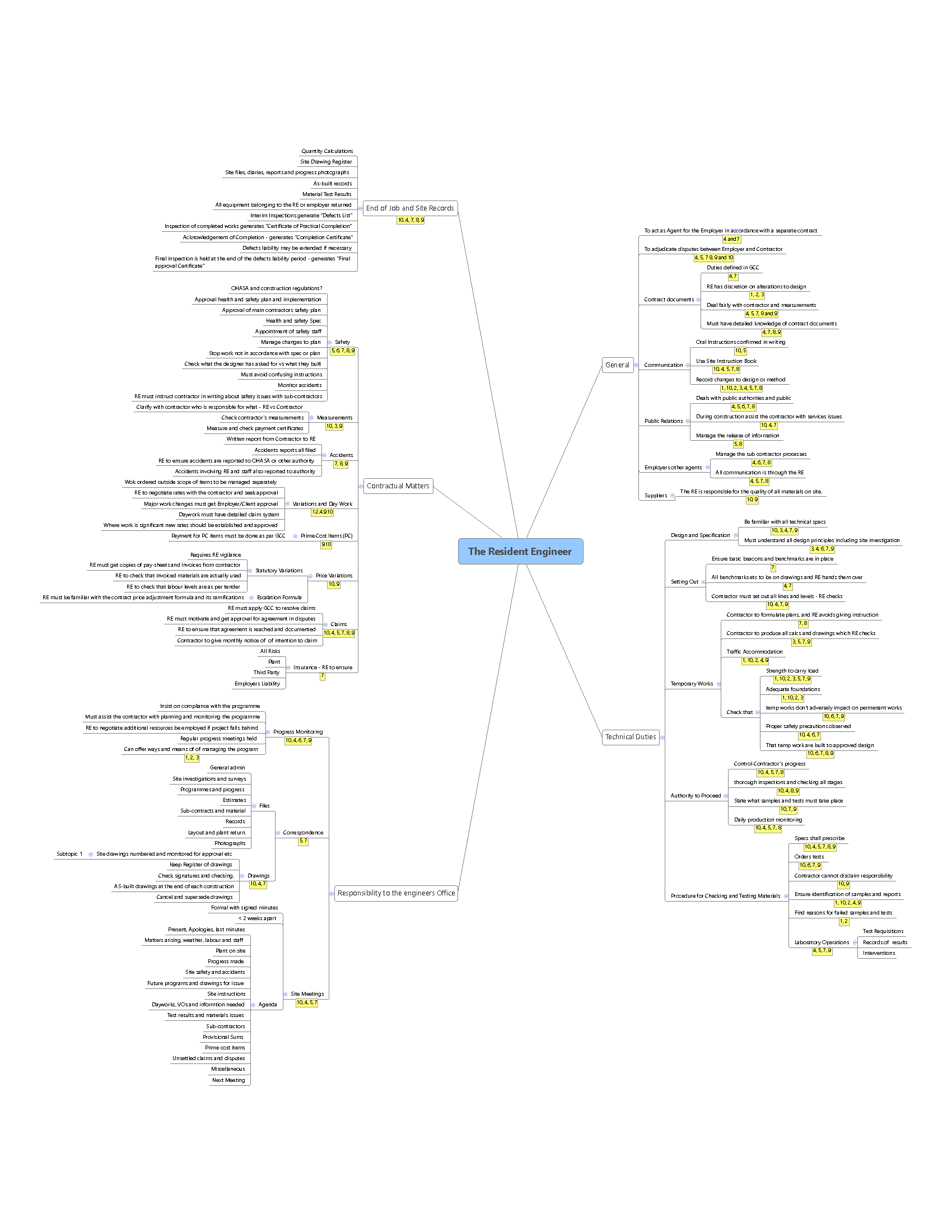
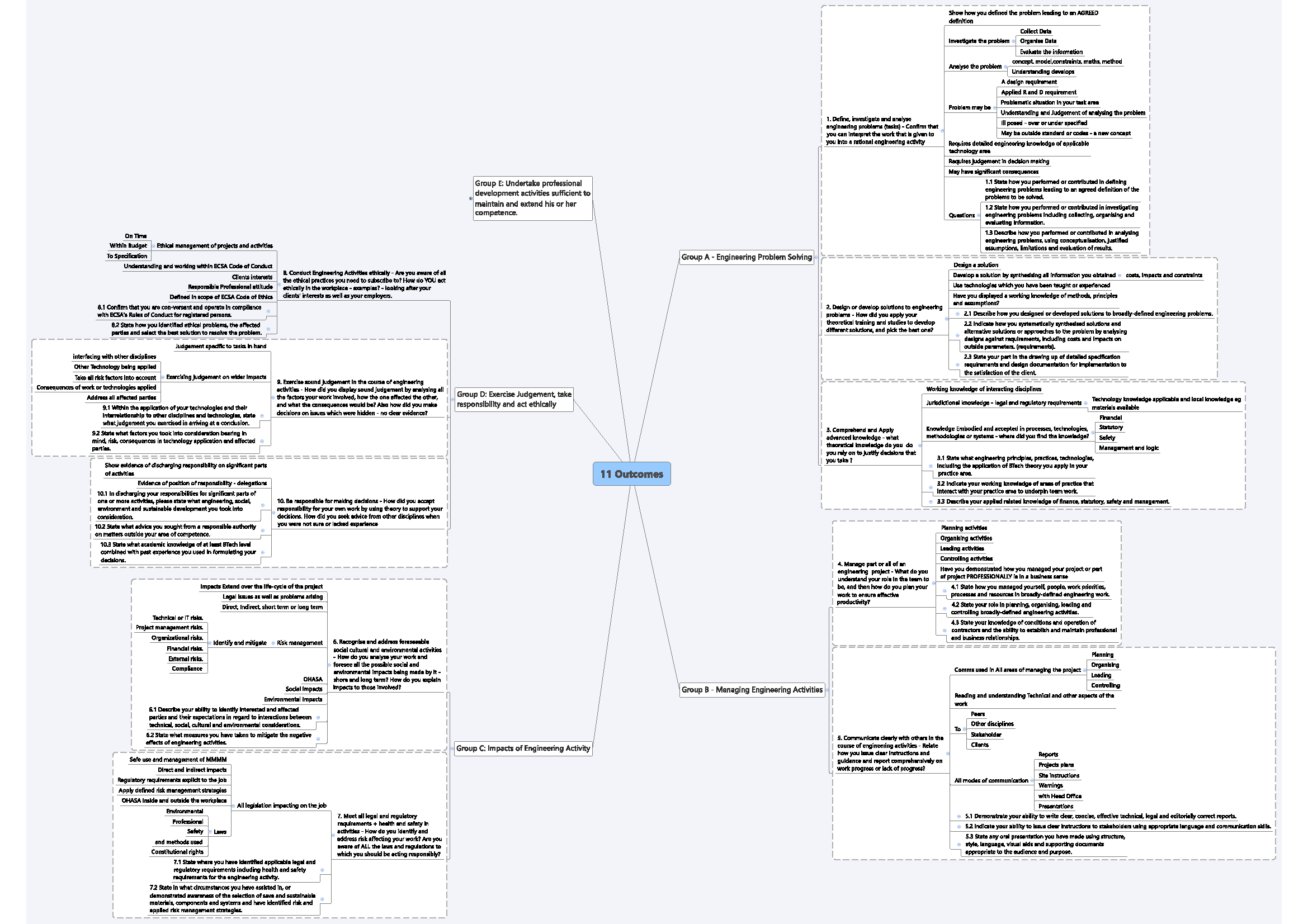
Candidates who have only worked in the construction sector are often concerned about Outcomes 1 to 3 which refer to investigating problems and designing solutions using their higher education theoretical knowledge. There are many areas in which construction practitioners gain design experience such as designing temporary works, new materials, solutions to drain and protect sites. Time is also spent designing solutions when challenges arise on site and investigating project requirements and developing the programme etc. The mind maps which may be downloaded below show the outcomes associated with the activities for which various levels of construction professionals are responsible. Those highlighted in red refer to Outcomes 1 to 3. There is also a mind map for a Resident Engineer which shows the many outcomes that can be developed on site.
Engineering education requires a strong foundation in both theory and practice. While engineering degrees emphasize fundamental theory (two years of mathematics, plus physics and chemistry), and BTech programs focus on applied subjects, both pathways aim to produce competent professionals.
Addressing the Path to Pr.Eng Registration:
Historically, the alternative route allowed experienced engineers to demonstrate their competence and address any theoretical gaps through further study. However, this route has been withdrawn.
Moving Forward:
ECSA is currently developing a robust assessment process to ensure that individuals without traditional engineering degrees can demonstrate the necessary theoretical knowledge for Pr.Eng registration. This may involve examinations to assess key engineering principles and concepts.
Addressing the Path to Pr.Eng Registration:
To bridge this gap, BTech graduates seeking Pr.Eng registration will need to demonstrate the necessary theoretical knowledgeThis may involve:
Supplemental Learning:
- Pursuing additional courses or engaging in independent study to cover any identified gaps in theoretical knowledge.
Demonstrating Equivalent Competence:
- Providing evidence of how their practical experience and project work have developed the required theoretical understanding.
In the interim
Candidates without traditional engineering degrees will need to clearly outline their additional theoretical training on the E-17 forms. This documentation should demonstrate how they have acquired the necessary theoretical foundation for professional engineering practice. BTech degrees, while valuable in developing applied skills, may not always fully align with the theoretical foundation required for Pr.Eng registration. Key differences include:
Focus on Application:
- BTech programs often prioritize the application of technology, with a reduced emphasis on fundamental mathematics, natural sciences, and engineering sciences.
Problem-Solving Depth:
- The curriculum may not always adequately prepare graduates for solving complex, multi-faceted engineering problems.
Final Year Project Scope:
- BTech final year projects may not always require the same level of theoretical depth and complexity as those encountered in traditional engineering degrees.
Key Considerations
Project Work:
- Work experience that involves the solution of complex engineering problems will be carefully considered when assessing an applicant’s theoretical foundation.
Continuous Professional Development:
- Ongoing professional development activities will also be taken into account when evaluating an applicant’s overall competence.
This information aims to provide a clear understanding of the ECSA registration process for individuals with foreign qualifications. For detailed guidance and specific requirements, please refer to ECSA’s official policies and guidelines.






Can I register with ECSA only with construction experience?
Candidates who have only worked in the construction sector are often concerned about Outcomes 1 to 3 which refer to investigating problems and designing solutions using their higher education theoretical knowledge. There are many areas in which construction practitioners gain design experience such as designing temporary works, new materials, solutions to drain and protect sites. Time is also spent designing solutions when challenges arise on site and investigating project requirements and developing the programme etc. The mind maps which may be downloaded below show the outcomes associated with the activities for which various levels of construction professionals are responsible. Those highlighted in red refer to Outcomes 1 to 3. There is also a mind map for a Resident Engineer which shows the many outcomes that can be developed on site.






Can I register in South Africa with a foreign qualification?
ECSA recognizes the diverse educational backgrounds of engineering professionals. However, to maintain the highest standards and uphold international recognition through agreements like the Washington Accord, Sydney Accord, and Dublin Accord, rigorous assessment of qualifications is essential.
Understanding the Assessment Process:
Recognized Qualifications:
- ECSA recognizes qualifications from institutions accredited by signatories to these international agreements.
Previously Evaluated Qualifications:
- Qualifications previously assessed and deemed equivalent by ECSA are also recognized. Individual Assessment:Qualifications not previously evaluated or found to be inconsistent with ECSA's standards require individual assessment, which may include further study.
Since ECSA has stringent exit level outcome requirements, a certificate from SAQA confirming the legitimacy of the foreign qualification is of little value. The foreign applicant should read policy E-17-P and must submit detailed documentation to allow ECSA to assess the qualification and pronounce on the category to which it is equivalent. Many international degrees do not satisfy the ECSA degree requirements, as they tend to specialise too early on, or core subjects are not covered. It is not unusual for foreign applicants to be advised that their degree qualifications are equivalent to a local BTech, in which case they may register as a Pr Tech Eng.
The documents required for assessing foreign qualifications are as follows:
- Certified copies of all qualification certificates, with translations if not in English, if not already uploaded.
- Certified copies of all full academic records or transcripts, with translations if not in English and, if not already uploaded.
- A curriculum analysis using the worksheet provided with as much detail as possible.
- Syllabi of the subjects studied, with translations if not in English.
- Project report(s).





International Professional?
Will my foreign registration be recognised in South Africa?
Here's Your Registration Roadmap:
- If you're registered abroad, we've simplified the process.
- First, check if your country is part of ECSA's Mobility Agreements. If your qualifications align with the Washington, Sydney, or Dublin Accords, you'll follow our standard registration.
- Special Fast Track for MICE & Engineers Ireland: If you're registered with MICE (London) or Engineers Ireland and hold an honours degree, you're in luck!
- Simply complete the Mutual Exemption Agreement form and update your CPD activities – that's it!
- Otherwise, we'll assess your qualifications as described earlier, and then guide you through the standard process.
Our Academies offers cutting edge, hands on training and expert Mentorships
SAICE-PDP is a non-profit championing engineering excellence, empowering engineers. Empower engineers in South Africa and beyond with targeted training and development programs.




SAICE-PDP adapted to the “New Normal” by adding new courses to address contractual and project challenges.
Our online courses are now accessible on SAICE and CESA websites, catering to individual and company needs.
You can join facilitator-led courses from anywhere!